A poster artist is an artist who designs posters. Ten of them invented the modern poster: Jules Chéret, Toulouse-Lautrec, Mucha and Steinlen in the Belle Époque, Cappiello and Lucian Bernhard before 1914, Cassandre, Roger Broders and Paul Colin between the wars, and Savignac after 1945. Each brought an idea we still see on our walls today.
Here are these ten famous poster artists in the order of their story, what each of them invented, their most famous poster and what remains of them in today’s interiors.
What is a poster artist?
The French have a word for it, affichiste, which names both the artist and the craft: designing an image that will be printed large, pasted on a wall and seen for a few seconds by people in a hurry. A poster artist is neither a painter nor a book illustrator. Everything has to be said at a glance, with few words and colours that carry. That challenge, taken up by each generation, gave birth to an art form of its own.
The Belle Époque: the poster takes to the streets
Jules Chéret (1836-1932)
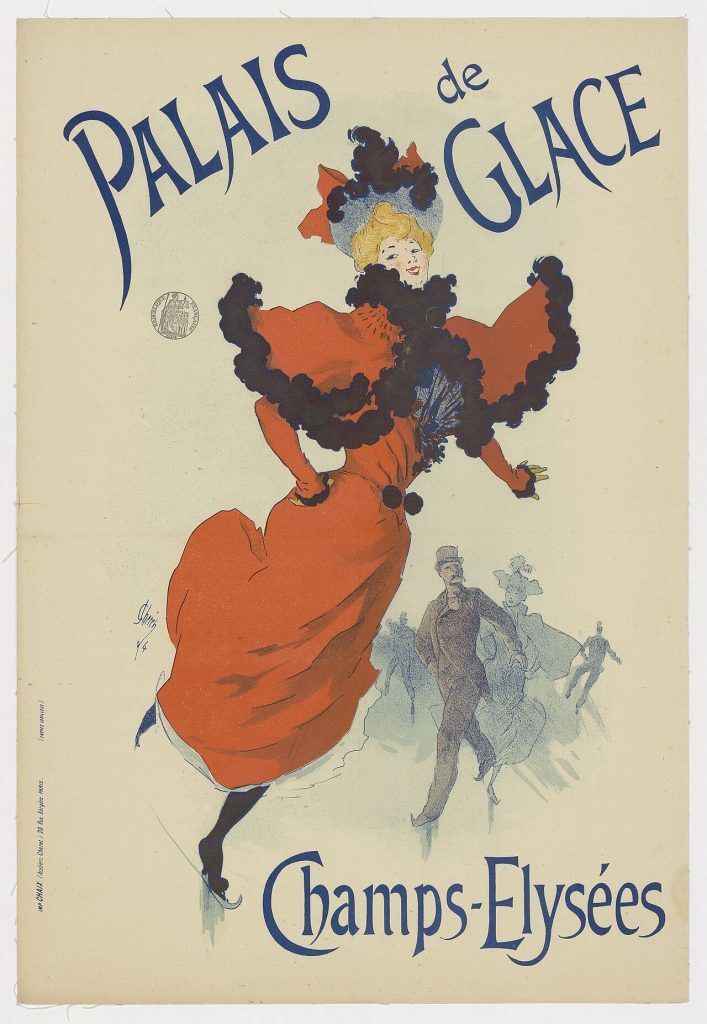
Born in Paris and apprenticed to a lithographer at 13, Jules Chéret spent nearly six years in London before opening his own lithography workshop in Paris in 1866. There he printed hundreds of colour posters for theatres, dance halls, cabarets and everyday products. His laughing, twirling young woman, always in motion, became so familiar that Parisians called her the “Chérette”. 🖌️
What he invented: the illustrated colour poster as street art. He is often called the father of the modern poster, and the fine arts museum in Nice, where he died, now bears his name.
Henri de Toulouse-Lautrec (1864-1901)
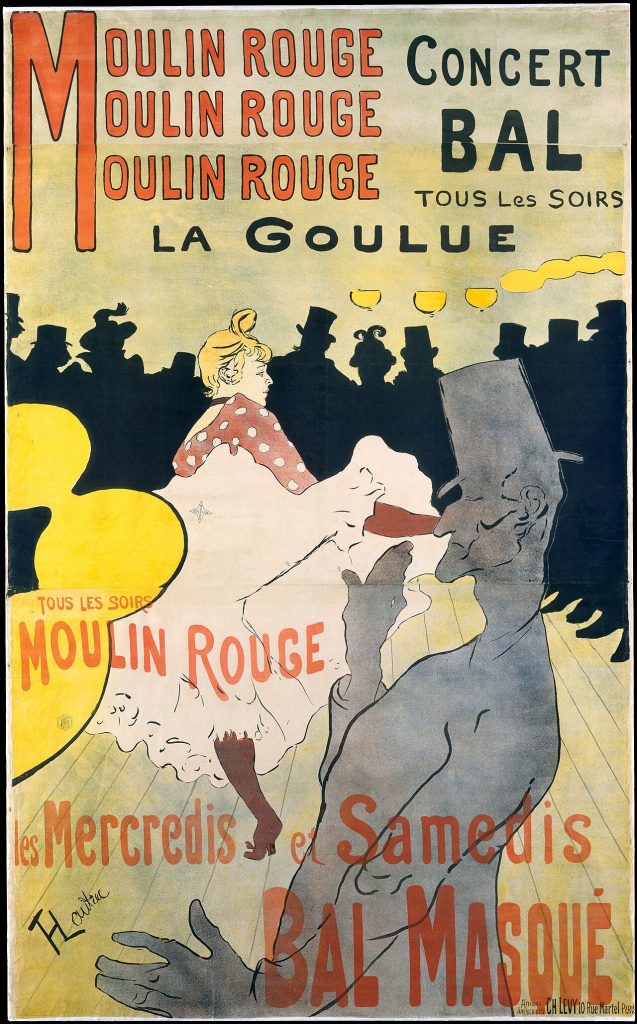
In 1891, Charles Zidler, director of the Moulin Rouge, found the poster Chéret had made for his dance hall too tame. He handed the job to a 27-year-old painter who was a regular there: Henri de Toulouse-Lautrec. The result, Moulin Rouge, La Goulue, is a lithograph 1.70 m tall, printed in about 3,000 copies. The dancer kicks up her leg in the centre, Valentin le Désossé glides past as a grey shadow in the foreground, and the audience is reduced to a row of black silhouettes.
What he invented: bold cropping and large flat areas of colour, inspired by the Japanese prints then in fashion. With him, the poster stopped telling a story: it struck.
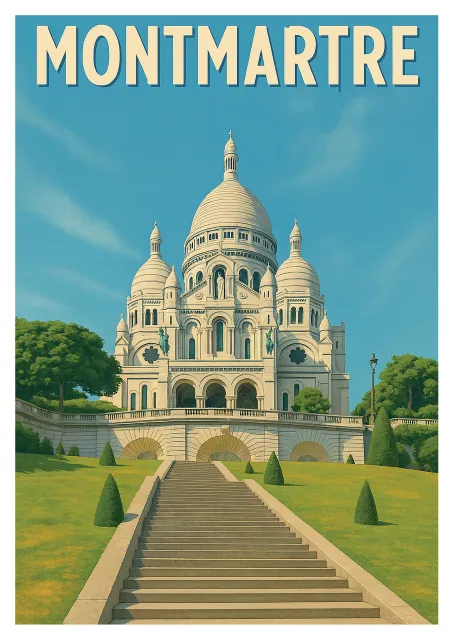
The Moulin Rouge stands at the foot of Montmartre, the hill where Lautrec, Steinlen and so many artists lived. Our Sacré-Cœur poster keeps its light.
Alphonse Mucha (1860-1939)
On 1 January 1895, the poster Gismonda for Sarah Bernhardt covered the walls of Paris. A very tall, narrow format, a full-length woman, a mosaic halo, hair in arabesques: Mucha’s style became the style of Art Nouveau as a whole. He then turned his figures into decorative series sold to be hung at home.
What he invented: the decorative poster, one you keep and frame. His whole story is told in our article on Alphonse Mucha and Art Nouveau posters.
Théophile-Alexandre Steinlen (1859-1923)
Born in Lausanne and settled in Montmartre, Steinlen drew the street, workers, laundresses and above all cats. In 1896, his Tournée du Chat Noir turned a seated black cat with a red halo into the emblem of the famous cabaret, and one of the most reproduced posters in history.
What he invented: the emblem poster, whose image outlives the product. The cabaret closed long ago, its cat is still here: we devoted a whole article to Steinlen’s Le Chat Noir.
Before 1914: the poster learns to sell
Leonetto Cappiello (1875-1942)
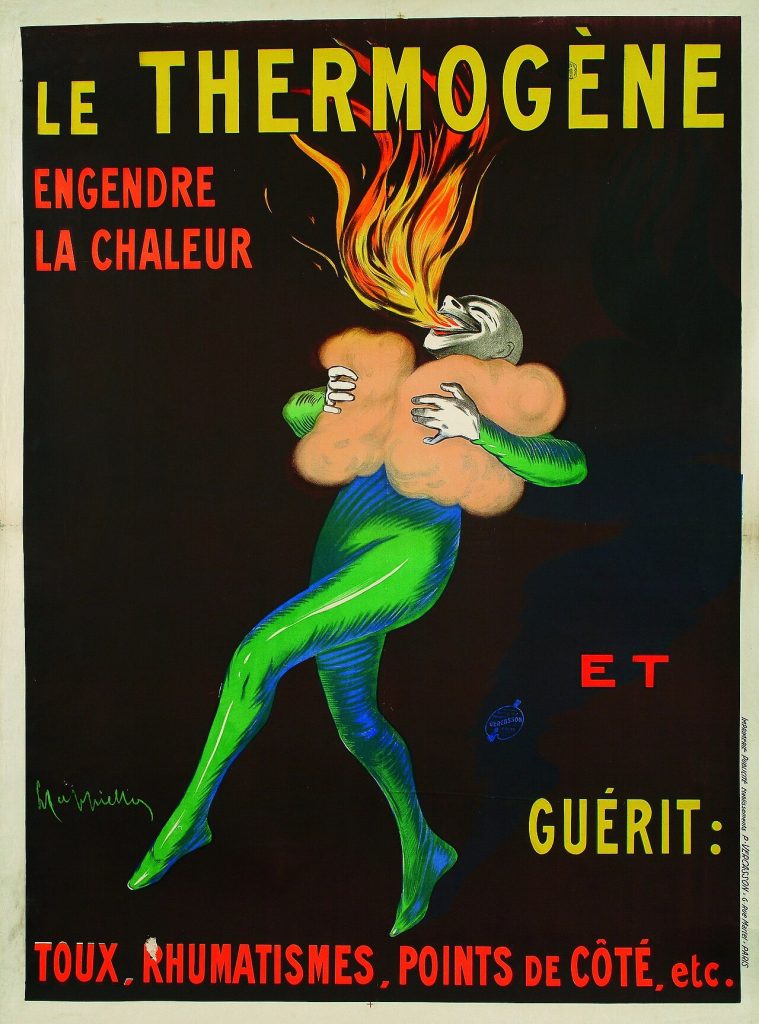
Born in Livorno, Cappiello arrived in Paris in 1898 as a cartoonist for Le Rire. When he turned to posters, he broke with busy scenes: no more scenery, just a single figure, often unexpected, leaping out of a dark background. For Thermogène, a heat-producing cotton wadding, he drew in 1909 a figure in green tights breathing fire 🔥. More than a century later, people remember the image far more than the product.
What he invented: the eye-catching image, a silhouette that grabs attention from afar. Seen as the renewer of the French poster after Chéret, he worked for Cinzano (1910), Bouillon Kub and Dubonnet, and pared his style down until only one idea and one brand remained.
Lucian Bernhard (1883-1972)
In Berlin, around 1906, a young German designer, Lucian Bernhard, pared a poster for Priester matches down to almost nothing: two matches and the brand name in large letters on a plain background. Germans called this style the Sachplakat, the “object poster”. Bernhard applied it to Stiller shoes, Manoli cigarettes and Bosch, then settled in New York in the mid-1920s.
What he invented: the poster reduced to the product and the brand. All modern advertising design, from logos to brand visuals, owes him something.
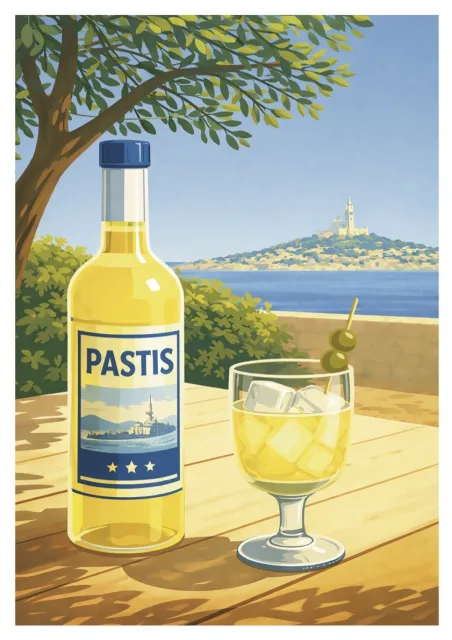
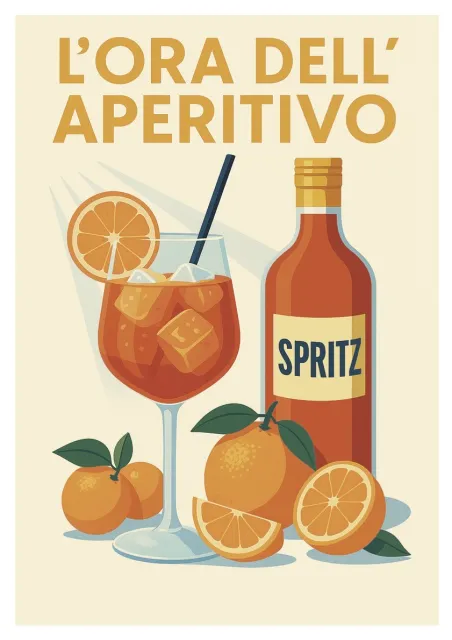
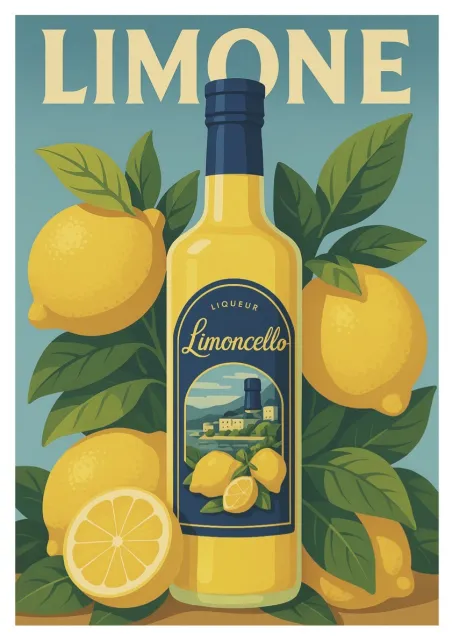
Cappiello drew Cinzano, Dubonnet and many other aperitifs: thanks to him and those who followed, the aperitif poster became a genre of its own, one that still livens up kitchens and home bars.
Aperitif time, in the spirit of old-time advertising
Between the wars: geometry and travel
Cassandre (1901-1968)
Born Adolphe Mouron, Cassandre was 22 when his poster Au Bûcheron, for a furniture shop, won the grand prize at the International Exhibition of Modern Decorative and Industrial Arts. Then came Étoile du Nord (1927), whose rails race towards a star, the Dubo, Dubon, Dubonnet series (1932), where the drinker fills with colour as his glass empties and the slogan completes itself, and the liner Normandie (1935), seen from below like a cliff of steel. He also designed typefaces, Bifur and Peignot, and much later the Yves Saint Laurent logo (1961).
What he invented: the geometric poster, where lettering is part of the image. He is the great name of the Art Deco poster, whose codes we explore in our article on Art Deco style.
Roger Broders (1883-1953)
Between 1922 and 1932, Roger Broders designed dozens of posters of the French Riviera, Provence and the Alps for the PLM railway company. Large flat areas of colour, deep perspectives, a tree or a walker in the foreground, a lake or a bay opening up behind: he sold not so much a train as the urge to leave.
What he invented: the travel poster as we still picture it today. Our own posters follow in his footsteps. His story and that of his fellow artists is told in our article on PLM railway posters.
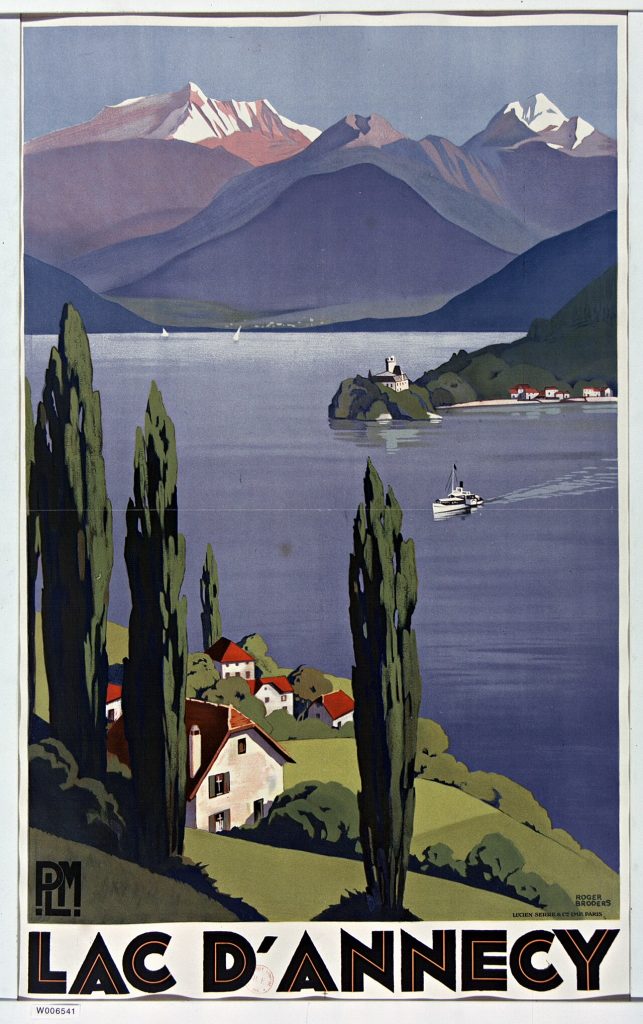
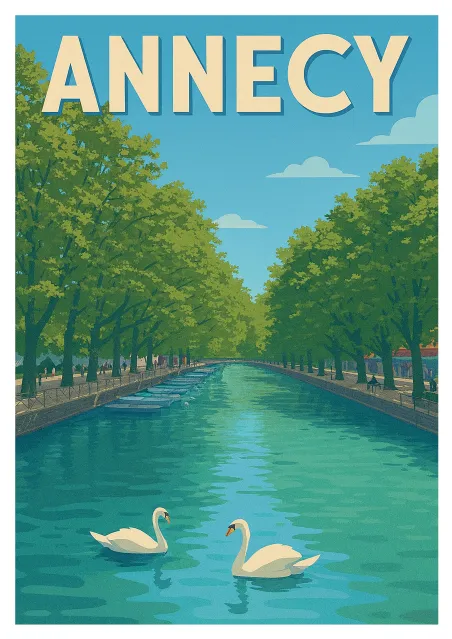
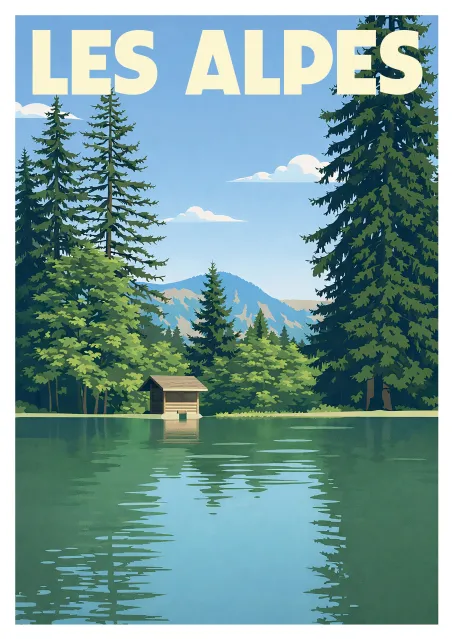
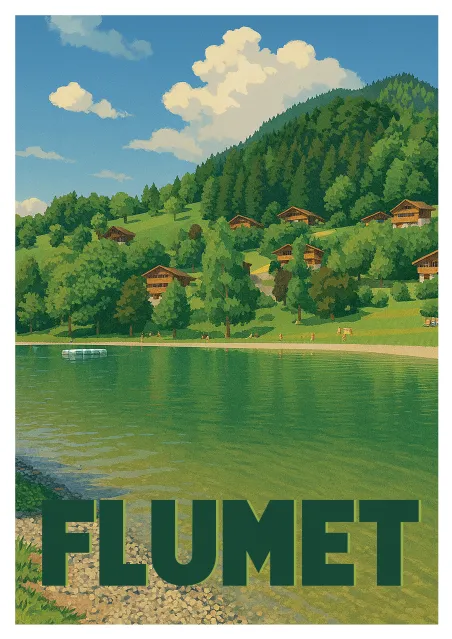
Almost a century later, Lake Annecy has lost none of its colours. Our lake and mountain posters take up what Broders loved so much: water, peaks and a clear, bright light.
Lakes and mountains, in the tradition of PLM posters
Paul Colin (1892-1985)
In 1925, the young Paul Colin designed the poster for the Revue nègre at the Music-Hall des Champs-Élysées. It helped launch a still unknown American dancer: Josephine Baker. Colin went on to sign more than 1,400 posters, mostly for the stage, and in 1926 opened a school that trained generations of designers. His motto sums up the whole craft: “a poster should be a telegram addressed to the mind”.
What he invented: the Art Deco stage poster, sharp and stripped back, and passing on the craft through teaching.
After 1945: humour takes over
Raymond Savignac (1907-2002)
Trained alongside Cassandre, Savignac became famous at 41, in 1949, with the Monsavon cow whose milk flows straight into the soap. Then came the Cinzano zebra, the Air France giraffe and the Bic boy. One idea, one gag, an almost childlike drawing: his posters are understood in a second and make you smile.
What he invented: the visual gag. His life and his 8 most famous posters are in our portrait of Raymond Savignac.
The 10 poster artists at a glance
| Poster artist | Dates | What he invented | A famous poster |
|---|---|---|---|
| Jules Chéret | 1836-1932 | The illustrated colour poster | Palais de Glace (1894) |
| Henri de Toulouse-Lautrec | 1864-1901 | Bold cropping and flat colour | Moulin Rouge, La Goulue (1891) |
| Alphonse Mucha | 1860-1939 | The decorative poster | Gismonda (1895) |
| Théophile-Alexandre Steinlen | 1859-1923 | The emblem poster | Tournée du Chat Noir (1896) |
| Leonetto Cappiello | 1875-1942 | The eye-catching image | Le Thermogène (1909) |
| Lucian Bernhard | 1883-1972 | The object poster | Priester (around 1906) |
| Cassandre | 1901-1968 | The geometric poster | Normandie (1935) |
| Roger Broders | 1883-1953 | The travel poster | Lac d’Annecy (1930) |
| Paul Colin | 1892-1985 | The Art Deco stage poster | La Revue nègre (1925) |
| Raymond Savignac | 1907-2002 | The visual gag | Monsavon au lait (1949) |
Why are some posters not shown here?
In France, an artist’s work enters the public domain seventy years after their death, on the following 1 January. Chéret, Lautrec, Cappiello and Broders can therefore be reproduced freely, with credit. Bernhard (free in 2043), Cassandre (2039), Colin (2056) and Savignac (2073) are still protected: we describe their posters without showing them. You can see them in museums and specialist libraries, such as the Bibliothèque Forney in Paris or the Musée des Arts Décoratifs.
What can these great poster artists bring to your home?
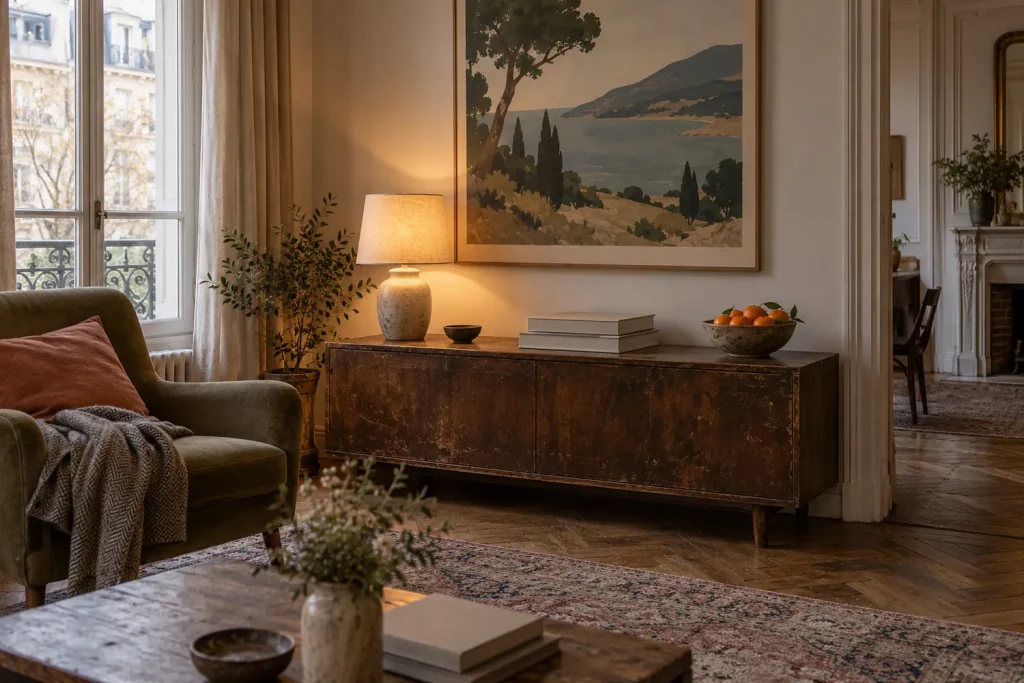
Their lesson fits in a few words: a strong image, readable from afar, bold colours and flat areas. That is exactly what keeps a poster on a wall for years without growing tiresome. A single large A3 poster (29.5 x 41.9 cm) above a sideboard has more impact than ten small scattered pictures; and if you hang several, pick them from the same colour family, the way a poster artist chose a palette.
To put together a set, our gallery wall guide gives the spacing and heights, and our guide to picture frame mounts helps a poster breathe in a larger frame.
Frequently asked questions
What do you call a person who designs posters?
A poster artist, or affichiste in French. The term refers to the artist who conceives and draws posters, whether for advertising, the stage, travel or cinema. When the work extends to logos and brand identities, they are also called a graphic designer.
Who is the father of the modern poster?
Jules Chéret (1836-1932). From 1866, he printed hundreds of illustrated colour posters in his own Paris workshop, for shows and everyday products. He was the first to turn the poster into street art.
Who are the most famous French poster artists?
Jules Chéret, Henri de Toulouse-Lautrec, Cassandre, Roger Broders, Paul Colin and Raymond Savignac. Leonetto Cappiello, born in Italy but based in Paris, is often added, as are the Czech Alphonse Mucha and the Swiss-born Steinlen, who made their whole poster careers in Paris.
What is the difference between a poster artist and a graphic designer?
A poster artist focuses on the poster, a single image designed to be seen from afar. A graphic designer has a broader field: logos, layouts, packaging, brand identities. Many poster artists, such as Cassandre or Lucian Bernhard, were also graphic designers and typeface designers.
What is Toulouse-Lautrec’s most famous poster?
Moulin Rouge, La Goulue, from 1891. Standing 1.70 m tall and printed in about 3,000 copies, it shows the dancer La Goulue and her partner Valentin le Désossé in front of an audience reduced to black silhouettes.
What remains
Chéret brought colour to the streets, Broders made people want to travel, Savignac made them smile. A century later, their ideas still hold: our posters, drawn from our own travels, owe them their flat colours, their bright light and that wish to capture a place in a single image. To discover them, browse our collections.