The most famous posters in history are those of the Belle Époque (Toulouse-Lautrec’s Moulin Rouge La Goulue, Mucha’s Gismonda, Steinlen’s Chat Noir), the war posters (Lord Kitchener, I Want You, Keep Calm and Carry On, We Can Do It!) and a handful of travel, film and advertising masterpieces, from Étoile du Nord to Metropolis.
Here is our selection of 15 posters, from 1889 to 2008. They all have one thing in common: you recognise them at first glance, even if you have never seen one in real life.
| Poster | Artist | Year | Why it is famous |
|---|---|---|---|
| Bal au Moulin Rouge | Jules Chéret | 1889 | It announced the opening of the world’s most famous cabaret |
| Moulin Rouge, La Goulue | Henri de Toulouse-Lautrec | 1891 | Lautrec’s first poster, and his most recognisable |
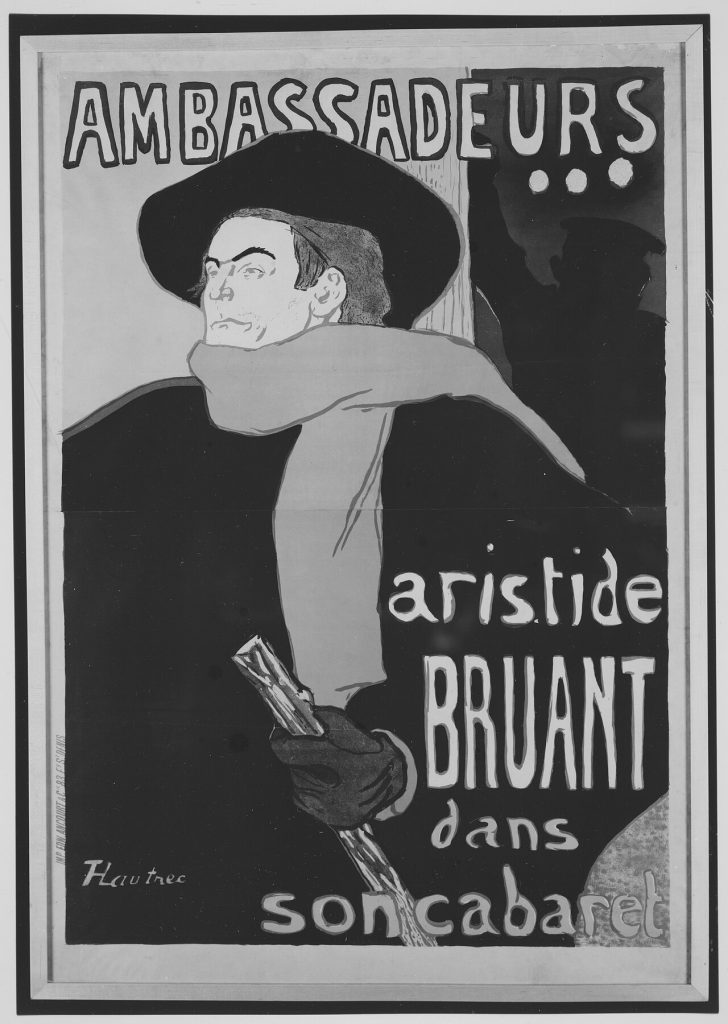
| Ambassadeurs: Aristide Bruant | Henri de Toulouse-Lautrec | 1892 | A hat and a red scarf: a portrait reduced to the essentials |
| Gismonda | Alphonse Mucha | 1895 | Sarah Bernhardt and the birth of the Mucha style |
| Tournée du Chat Noir | Théophile-Alexandre Steinlen | 1896 | The most reproduced black cat in the world |
| Le Thermogène | Leonetto Cappiello | 1909 | A fire-breathing figure makes the product unforgettable |
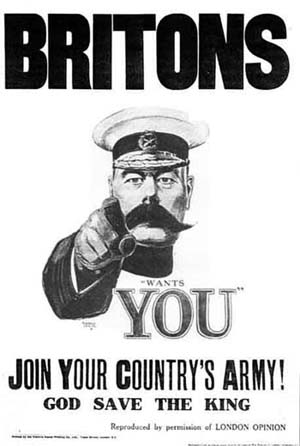
| Lord Kitchener Wants You | Alfred Leete | 1914 | The pointing finger, imitated all over the world |
| I Want You for U.S. Army | James Montgomery Flagg | 1917 | Uncle Sam, nearly four million copies |
| Metropolis | Heinz Schulz-Neudamm | 1927 | The most expensive film poster ever sold |
| Étoile du Nord | Cassandre | 1927 | Rails racing towards a star: the Art Deco of travel |
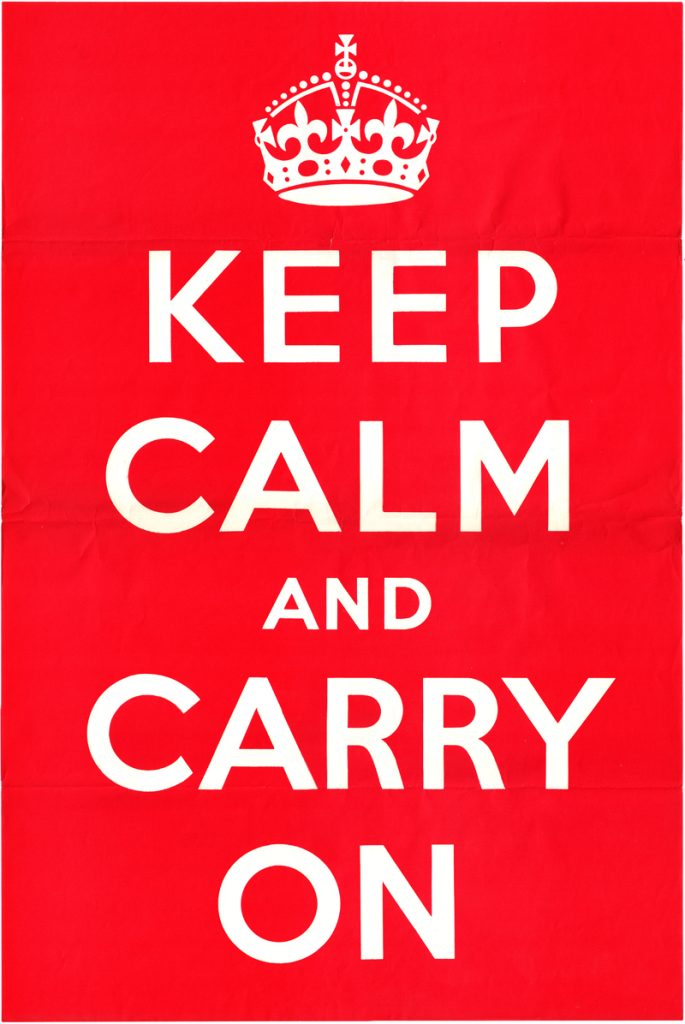
| Keep Calm and Carry On | British government | 1939 | Hardly ever displayed, a phenomenon from 2000 |
| À tous les Français | Free France | 1940 | France has lost a battle, not the war |
| We Can Do It! | J. Howard Miller | 1943 | Up for two weeks in a factory, an icon forty years later |
| Monsavon | Raymond Savignac | 1949 | A cow whose milk flows into a bar of soap |
| Hope | Shepard Fairey | 2008 | A three-colour portrait that carried a presidential campaign |
The ones that brought art into the street
At the end of the 19th century, colour lithography made it possible to print large posters by the thousand. Paris was covered in images, and painters took them over. We tell their life stories in our article on the 10 poster artists who invented the modern poster; here, the works take centre stage.
Bal au Moulin Rouge, Jules Chéret (1889)
In 1889, the Moulin Rouge opened on Place Blanche, and Jules Chéret announced it. His light, dancing, brightly coloured women even gave their name to a type: the “Chérette”. Chéret signed hundreds of posters and is regarded as the father of the modern poster.
Moulin Rouge, La Goulue, Henri de Toulouse-Lautrec (1891)
Two years later, the owner of the Moulin Rouge found Chéret’s poster too tame and commissioned the next one from a 27-year-old painter. Lautrec reduced the audience to black silhouettes, put the grey shadow of Valentin le Désossé in the foreground and, in the centre, La Goulue in her white petticoats. Printed in around 3,000 copies, it was his first poster, and probably the most famous in history.
Ambassadeurs: Aristide Bruant, Henri de Toulouse-Lautrec (1892)
In 1892, the cabaret singer Aristide Bruant, at the height of his fame, was invited to the Ambassadeurs, a café-concert on the Champs-Élysées. He was the one who wanted a poster by his friend Lautrec, and who forced it on the reluctant manager. A wide hat, a black cape, a red scarf: Lautrec kept only the character’s attributes, and the scarf became his signature. That same year, he drew four posters for Bruant.
Gismonda, Alphonse Mucha (1895)
On 1 January 1895, the Gismonda poster for Sarah Bernhardt covered the walls of Paris. A very tall, narrow format, a full-length actress, a mosaic halo, soft colours: the unknown Alphonse Mucha became famous overnight, and Art Nouveau found its style. We have devoted an article to him: Alphonse Mucha and Art Nouveau posters.
Tournée du Chat Noir, Théophile-Alexandre Steinlen (1896)
A large seated black cat, a red halo, yellow eyes: the poster for the tour of Rodolphe Salis’s Montmartre cabaret is one of the most reproduced Belle Époque images today, on walls and mugs alike. Its story is in our article on Steinlen’s Le Chat Noir.
Le Thermogène, Leonetto Cappiello (1909)
On a black background, a little figure in tights clutches a pink wad of cotton and breathes fire. Thermogène was a warming cotton wadding, and Cappiello says nothing more: one strong, funny idea that sticks. With him, the poster left the arabesques of Art Nouveau behind and went straight to the point. All of modern advertising is already there.
The Paris of the poster artists, today
The ones that spoke to a whole country
During the two world wars, the poster became the government’s communication weapon: to recruit, reassure and mobilise. Some of these images are now better known than the campaigns they were made for.
Lord Kitchener Wants You, Alfred Leete (1914)
On 5 September 1914, the illustrator Alfred Leete drew the cover of London Opinion, a penny weekly: the face of Lord Kitchener, Secretary of State for War, with his thick moustache, pointing at the reader above the words “wants you”. The image was turned into a recruitment poster and became one of the most famous of the First World War. The pointing finger would be imitated in many countries.
I Want You for U.S. Army, James Montgomery Flagg (1917)
Three years later, the United States took up the idea. James Montgomery Flagg drew Uncle Sam, starred hat and pointing finger, and, to save himself the trouble of finding a model, gave him his own face, drawn in a mirror and aged. Nearly four million copies were printed in 1917 and 1918, and the poster went back into service during the Second World War.
Keep Calm and Carry On (1939)
A crown, five words, a red background. In 1939, the British government printed 2.45 million copies of this poster to keep up morale in the face of the expected air raids. It was hardly ever displayed, and was forgotten. In 2000, a copy resurfaced at Barter Books, a bookshop in Alnwick, in the north of England, which hung it in the shop: within a few years, it was everywhere, on mugs, bags and walls all over the world.
À tous les Français (1940)
“France has lost a battle! But France has not lost the war!” This is not the text of the 18 June radio appeal, with which it is often confused, but a poster printed in England at the end of July 1940, first in 1,000 copies, and pasted on the walls of London on 3 and 4 August. Two small French flags, a text signed by General de Gaulle, no illustration at all, and yet one of the most famous posters in French history.
We Can Do It!, J. Howard Miller (1943)
A woman worker in blue overalls and a red polka-dot headscarf rolls up her sleeve and flexes her arm. Drawn by J. Howard Miller for Westinghouse, the poster was only up for two weeks, in February 1943, in a few of the company’s factories, to encourage women already on the payroll. Rediscovered in 1982, it became a feminist symbol, often wrongly called “Rosie the Riveter”, after a different image.
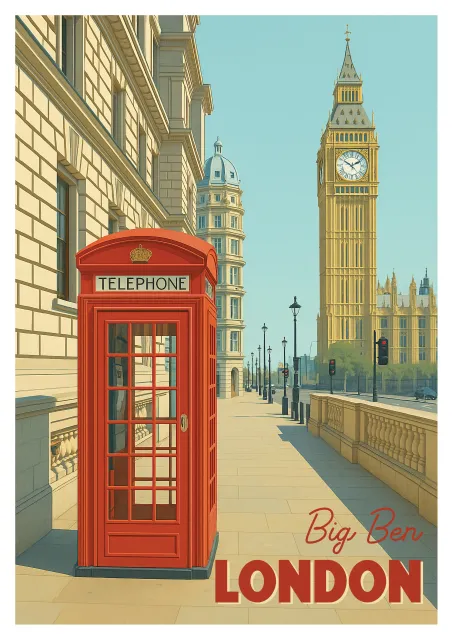
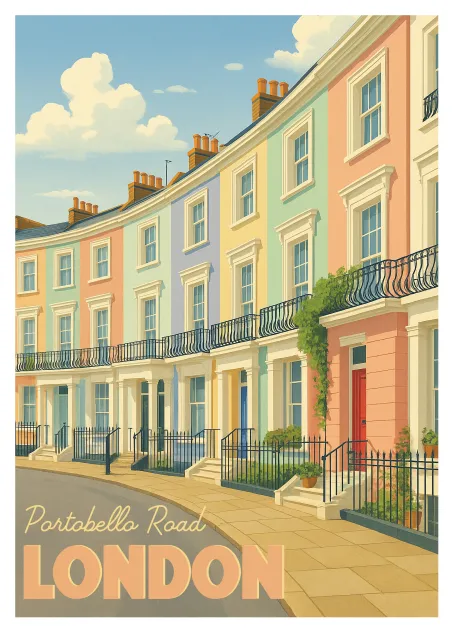
London, from Big Ben to Portobello
Why are some posters not shown here? In France, a work enters the public domain on 1 January following the 70th anniversary of its author’s death. Lautrec, Chéret, Mucha, Steinlen, Cappiello and Leete can be reproduced freely. Flagg (died 1960), Cassandre (1968), Schulz-Neudamm (1969), Savignac (2002) and Shepard Fairey, who is still alive, are still protected: we describe them without showing them.
The ones that sold a dream
A train, a soap, a film, a candidate: from the 1920s, the poster learned to sell with a single image. The best ones barely have any words left.
Metropolis, Heinz Schulz-Neudamm (1927)
For Fritz Lang’s film, the German poster artist drew the robot Maria in front of a city of skyscrapers, in a metallic Art Deco style. Only four copies are known to survive, one of them at MoMA in New York. In 2005, one sold for 690,000 dollars, a world record for a film poster according to Guinness.
Étoile du Nord, Cassandre (1927)
Rails converging towards a small star on the horizon: for the luxury train from Paris to Brussels and Amsterdam, Cassandre showed neither the locomotive nor the passengers, only the idea of the journey. It is one of the most admired Art Deco posters, and we tell its story in our article on Cassandre’s posters. Railway companies produced many other gems, such as the PLM posters.
Monsavon, Raymond Savignac (1949)
A white cow whose milk flows straight into a bar of soap: in one image, Savignac said everything about “Monsavon au lait”, and became famous at 41. The visual gag, the bold colour, the simple drawing: this is the golden age of French advertising posters, which we cover in our article on Savignac.
Hope, Shepard Fairey (2008)
In a single day, the street artist Shepard Fairey drew a portrait of Barack Obama in flat red, beige and blue, based on a press photo, with a single word underneath. First pasted in the street, the image became the symbol of the 2008 campaign, and the National Portrait Gallery in Washington acquired a version in January 2009. More than a century after Chéret, proof that the poster has lost none of its power.
Frequently asked questions
What is the most famous poster in the world?
There is no official ranking, but three posters always come up: Toulouse-Lautrec’s Moulin Rouge, La Goulue (1891), James Montgomery Flagg’s I Want You (1917) and Keep Calm and Carry On (1939). The first brought art into the street; the other two are among the most imitated images of the 20th century.
What is the most expensive poster in the world?
The poster for the film Metropolis (1927), designed by Heinz Schulz-Neudamm, holds the record for the most expensive film poster: 690,000 dollars in 2005, according to Guinness World Records. Only four copies are known. Major Belle Époque posters in good condition also fetch high prices at auction.
What is the most famous advertising poster?
In France, two advertising posters appear on every list: Le Thermogène by Leonetto Cappiello (1909), which invented the single-idea advert, and Monsavon by Raymond Savignac (1949), with its cow whose milk flows straight into a bar of soap. Steinlen’s Tournée du Chat Noir (1896), which announced a cabaret’s tour, is also one of the most reproduced old advertisements.
What is Toulouse-Lautrec’s most famous poster?
Moulin Rouge, La Goulue (1891), his very first poster, with the dancer in white petticoats and the audience in black silhouettes. Next come Ambassadeurs: Aristide Bruant (1892), with the famous red scarf, then Divan Japonais and Jane Avril (1893). Lautrec made around thirty posters in ten years.
Where can you see famous posters in France?
In Paris, the Musée des Arts Décoratifs holds a very large poster collection, and the Bibliothèque nationale de France tens of thousands. The Musée Toulouse-Lautrec in Albi brings together the painter’s posters, and the Musée des Beaux-Arts Jules-Chéret in Nice bears the name of the father of the poster.
Can you hang a reproduction of a famous poster at home?
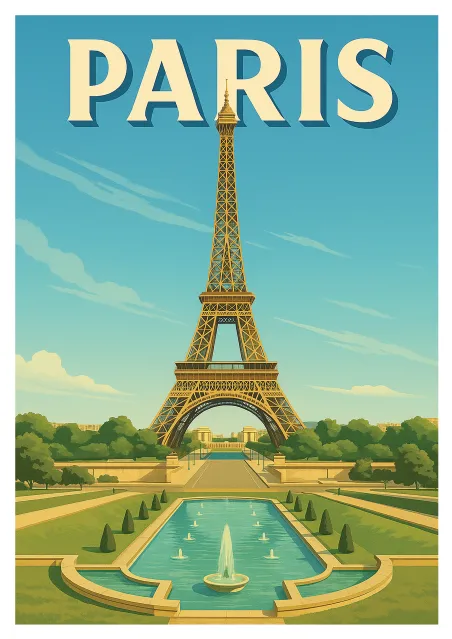
Yes, for works in the public domain, 70 years after their author’s death: Lautrec, Mucha, Chéret, Steinlen or Cappiello are reproduced freely, in museum shops and elsewhere. For a more personal look, a poster of a place you have loved, in the same graphic spirit, also tells your own story.
What they have in common
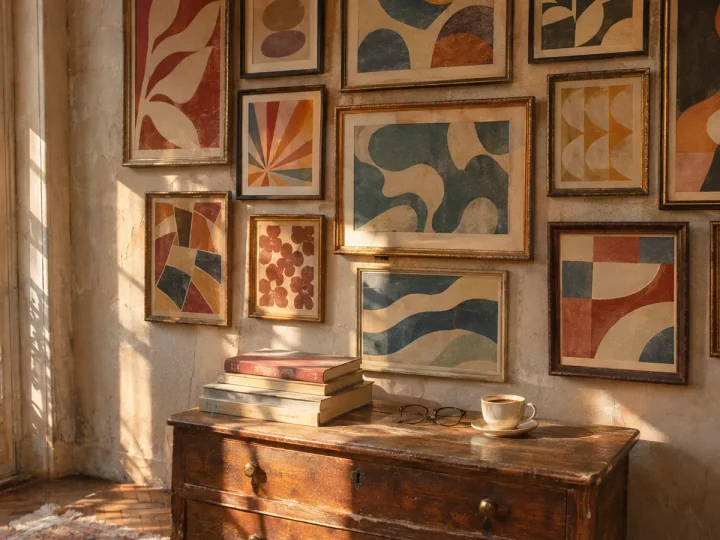
Read the list again: a cat, a pointing finger, a red scarf, a star at the end of the rails. The most famous posters all rest on one idea, one image and very few words. That is what makes them readable in two seconds in the street, and beautiful a hundred years later on a wall. If you want to hang several together, our guide to the gallery wall will help you arrange them. 🖼️