Raymond Savignac (1907-2002) is one of the greatest French poster artists. Trained alongside Cassandre, he made his name in 1949 with the Monsavon poster and its cow whose milk flows straight into the soap. His secret: a single idea, a simple drawing and plenty of humour, for Bic, Air France, Cinzano or Maggi.
Savignac’s 8 most famous posters
Monsavon au lait (1949)
A cow sits enthroned on a bar of soap, and milk flows from its udders straight into the soap. No long slogan: the image says it all, the soap is made with milk. It was Savignac’s first masterstroke, summed up in a line often attributed to him: “I was born at the age of forty-one, from the udders of the Monsavon cow.” 🐄
Laines d’Aoust (1949-1951)
A woman knits her own hair. The gag makes it clear at a glance that this is about wool, and gives the brand a gentle, funny image.
Cinzano (1951)
For the Italian aperitif, Savignac drew a zebra. Choosing an unexpected animal rather than a bottle or a glass was already his signature.
Gitanes, for the Seita (1954)
For the Seita, the French tobacco company, Savignac drew the gitane, the figure of the cigarettes of the same name.
Air France (1956)
A giraffe for an airline: the long-necked animal suggests height, travel and faraway places, with a touch of humour. Savignac would work for Air France again almost thirty years later, in 1985.
Maggi (1959)
The beef of the pot-au-feu, for Maggi stock: once again, the animal embodies the product, like the Monsavon cow ten years earlier.
Bic (1960)
For the Bic ballpoint pen, Savignac drew a little boy who became the brand’s emblem. Many people know him without knowing who drew him.
Aspro (1963)
A bald man grimaces as a line of cars drives through his head, in one ear and out the other: a migraine turned into a traffic jam. The poster won the Martini gold medal in 1964.
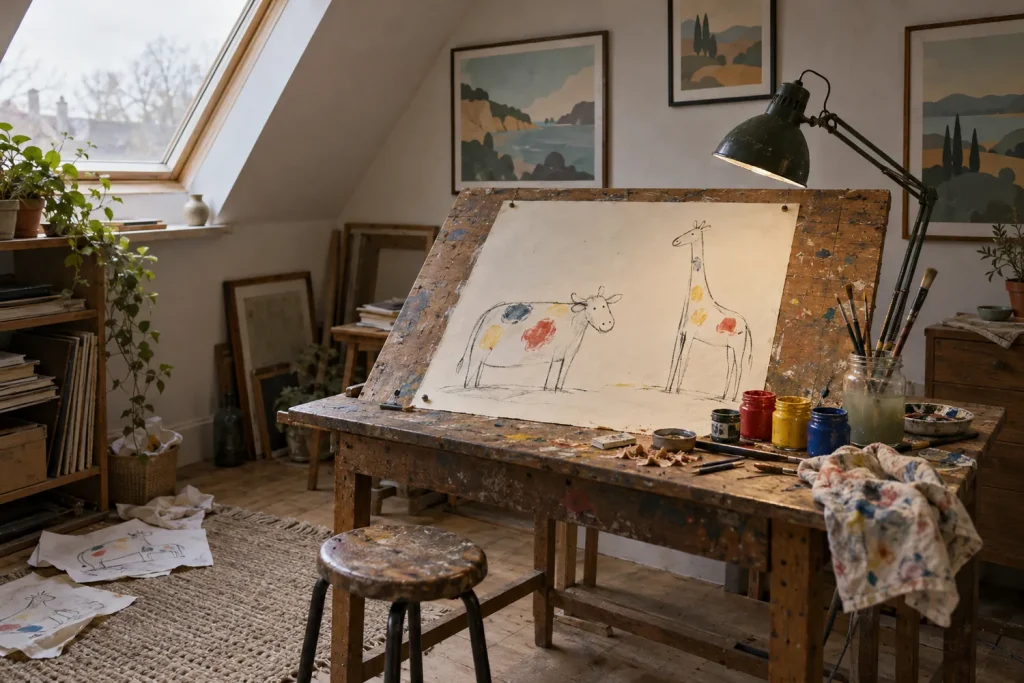
Who was Raymond Savignac?
Raymond Savignac was born on 6 November 1907 in Paris. His parents, who came from near Villefranche-de-Rouergue in south-west France, ran a small working-class bistro on rue de la Glacière, then a café-tobacconist on rue des Petits-Carreaux. The boy watched the regulars, the drinks brands, the advertisements: the street and the café were his first school.
- 1922: he started out as a tracing draughtsman and took evening classes in technical drawing. He was self-taught.
- 1925: he joined Robert Lortac’s animation studio, where he traced the posters of the great designers of the day, Cassandre, Loupot, Carlu.
- 1933: he met Cassandre, who commissioned a poster for Maria Grimal roquefort, then hired him at the Alliance Graphique in 1935.
- 1949: the Monsavon poster made him famous. He was 41.
- 1952: he became a member of the Alliance Graphique Internationale.
- 1950s and 1960s: the biggest French and European brands called on him.
- 29 October 2002: he died aged 94 in Trouville-sur-Mer, Normandy, where he had settled in the late 1970s and kept drawing until the end of his life.
Savignac and Cassandre, two styles
Savignac did not try to describe a product or praise its qualities. He invented a visual gag: a single, immediate, often absurd image that makes you smile and sticks in your mind. His line is simple, almost childlike, his colours bold. Each poster works as a kind of ideogram: one idea, readable in a second, from across the street. 🎨
His style stands apart from his mentor’s. Where Cassandre built geometric, spectacular posters, Savignac relied on humour and tenderness.
| Cassandre | Savignac | |
|---|---|---|
| Heyday | 1920s and 1930s | 1950s and 1960s |
| Drawing | Geometric, inspired by Cubism and Art Deco | Simple, almost naive |
| Driving force | Speed, power, modernity | Humour, gags, surprise |
| Favourite subjects | Ocean liners, trains, aperitifs | Animals and characters in absurd situations |
To trace this geometric style back to its roots, see our article on Art Deco style.
Did Savignac design film posters?
Yes. He designed the posters for La Guerre des boutons (War of the Buttons, Yves Robert, 1962), Bébert et l’Omnibus (Yves Robert, 1963), Mortadella (Mario Monicelli, 1971) and Lancelot du Lac (Robert Bresson, 1974). He also drew for the stage: his poster for the comedian Raymond Devos, in 1967, won him the Martini grand prize the following year.
When photography replaced drawing
In the 1970s, advertising agencies increasingly favoured photography. Disappointed, Savignac painted a series of twenty-four sarcastic pictures, Défense d’afficher (Bill Posting Prohibited), a selection of which was published by Delpire in 1971. He also produced committed posters, such as Non à l’autoroute rive gauche (No to the Left Bank motorway, 1973), showing Notre-Dame threatened by cars. Paradoxically, these images brought the commissions back, and he won the French poster grand prize again in 1981 for a Citroën campaign.
Where can you see Savignac’s posters?
Savignac’s works are protected by copyright until 1 January 2073, seventy years after his death: that is why we describe them without showing them. To see them:
- The Bibliothèque Forney in Paris: specialising in the graphic arts, it holds a Savignac collection and has devoted two exhibitions to him, “Savignac affichiste” (2001-2002) and “Savignac et le don La Vasselais” (2019).
- MoMA in New York: the museum holds several of his posters, including Monsavon au lait and L’Eau qui fait pschitt (1950).
- His books: his autobiography Affichiste (Robert Laffont, 1975) and L’Affiche de A à Z (Hoëbeke, 2001), both in French.
- An illustrated biography: the town of Villefranche-de-Rouergue, where his family came from, has a detailed page (in French) with several of his posters. A secondary school in the town bears his name.
How can you bring the Savignac spirit into your decor?
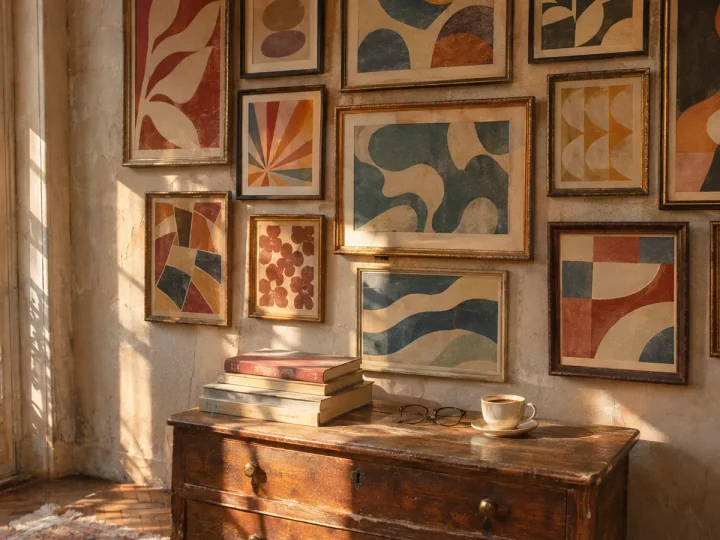
The Savignac spirit is a bold, funny, colourful image, hung where you really live: the kitchen, the home bar, the entrance. A few ideas to bring it home:
- One poster, one idea: choose a simple image you can read from afar, rather than a busy composition.
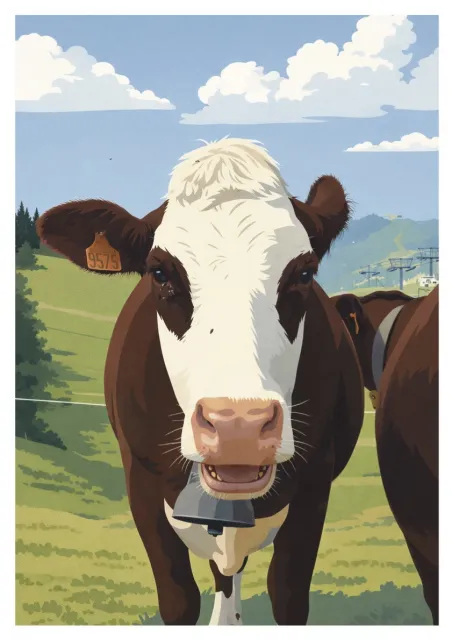
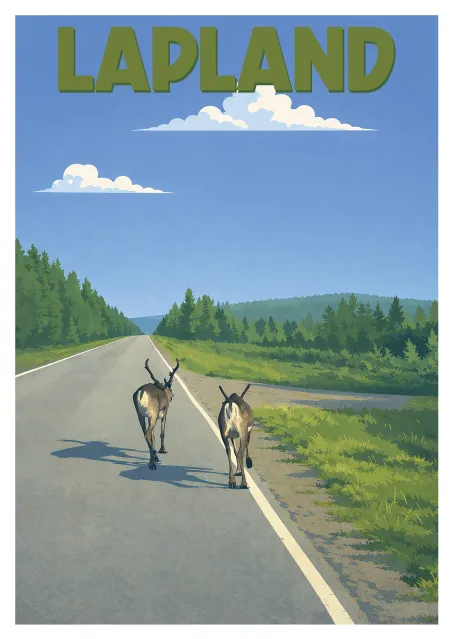
- Animals: the cow, the zebra, the giraffe, the ox… Savignac made animals his best ambassadors. An animal poster brings the same tenderness.
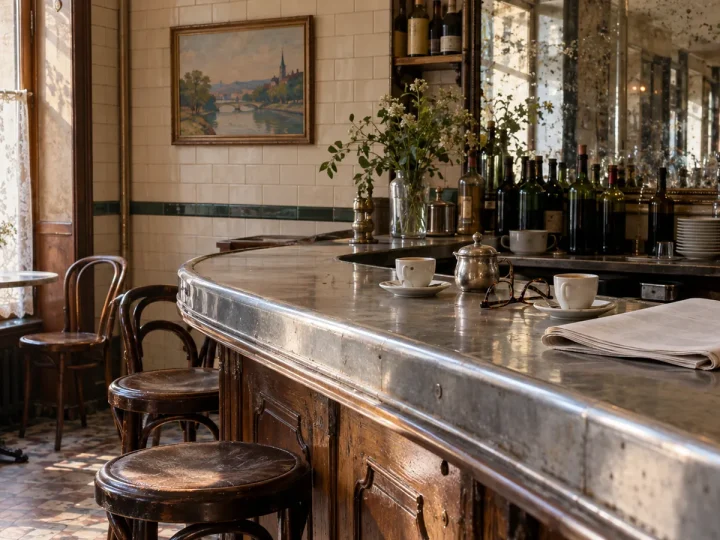
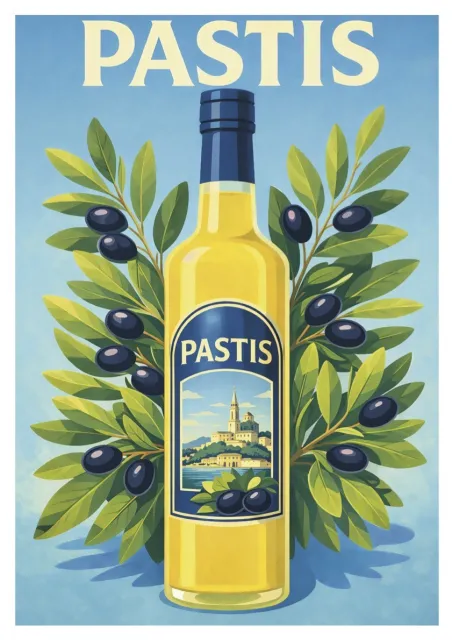
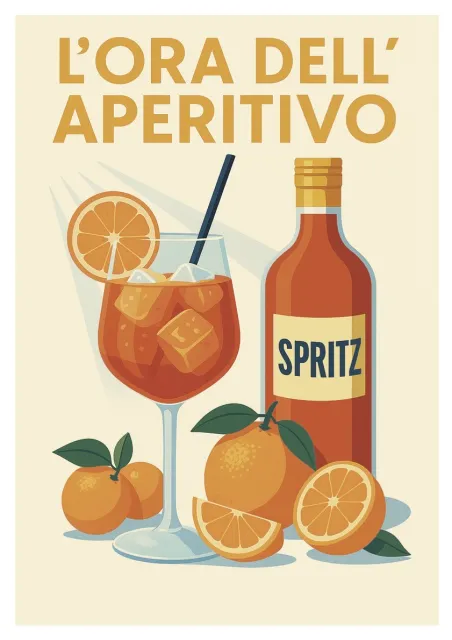
- The bistro spirit: Savignac grew up behind a café counter. An aperitif poster in the kitchen or by the bar recalls the advertisements of the cafés of old.
- Flat colours and light backgrounds: a poster in bold colours breathes better on a white or cream wall.
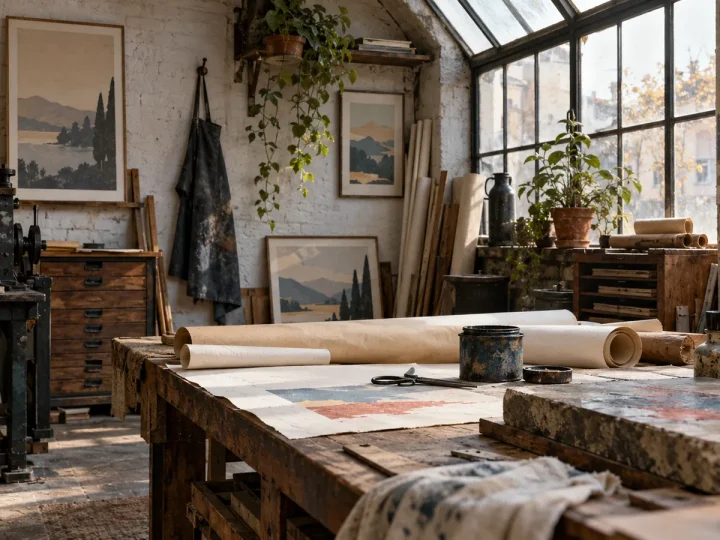
Animals in the spotlight, as with Savignac
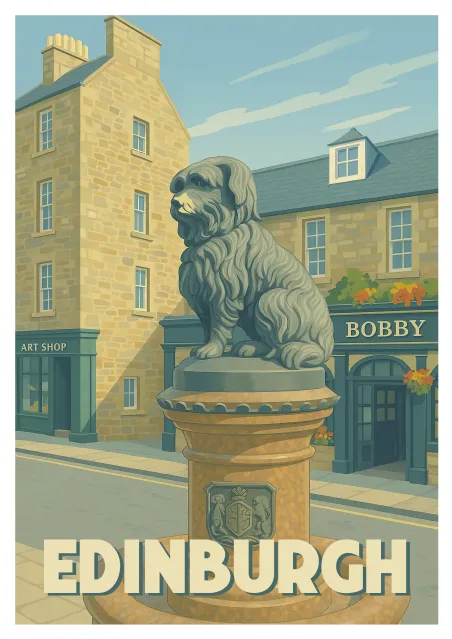
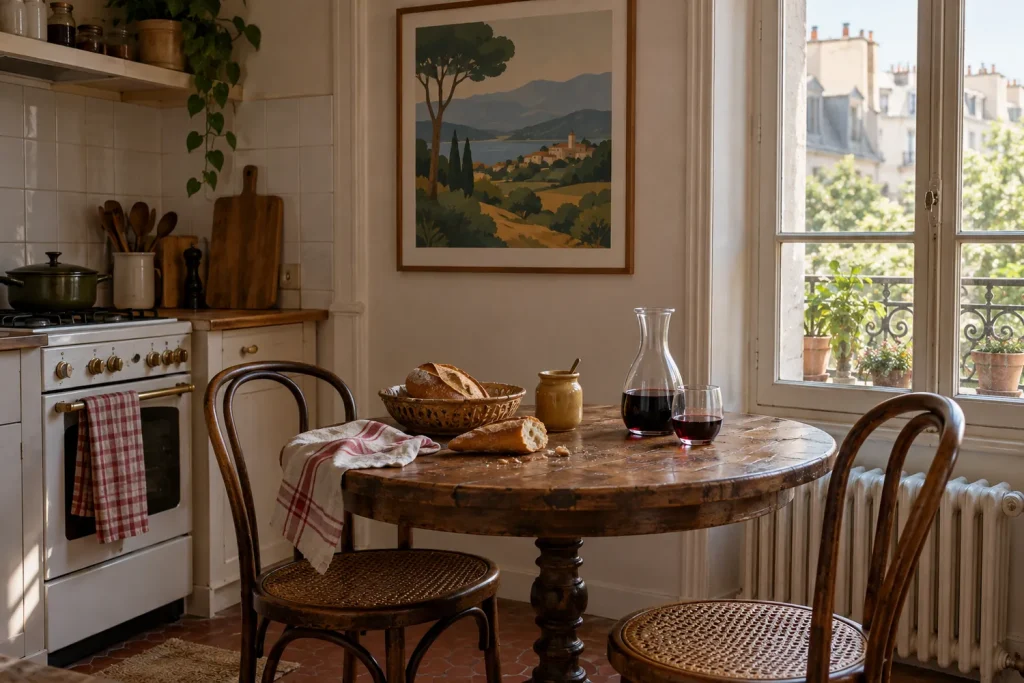
Aperitif time, in memory of the old bistro advertisements
Frequently asked questions
Who was Raymond Savignac?
Raymond Savignac (1907-2002) was a French poster artist, famous for his humorous advertising posters of the 1950s and 1960s. Trained alongside Cassandre, he worked for Monsavon, Bic, Air France, Cinzano, Maggi, Aspro and Perrier.
What is Savignac’s most famous poster?
The Monsavon au lait poster (1949), in which a cow’s milk flows straight into a bar of soap. It made him famous at the age of 41. The Bic boy (1960), who became the brand’s emblem, is also very well known.
What is the link between Savignac and Cassandre?
Cassandre was his mentor. He commissioned his first poster in 1933, then hired him at the Alliance Graphique in 1935. Savignac then moved away from his geometric style to invent a simple, humorous way of drawing.
Are Savignac’s posters copyright-free?
No. Savignac died in 2002: his works are protected until 1 January 2073. Reproducing them requires permission. You can, however, see them in museums, libraries and the books devoted to him.
One idea, one smile
Savignac proved that a poster does not need to say much: a cow, a zebra or a little boy is enough when the idea is right. To discover those who came before him, read our articles on Alphonse Mucha, on Steinlen’s Chat Noir and on PLM railway posters. And browse our animal posters and our aperitif posters.