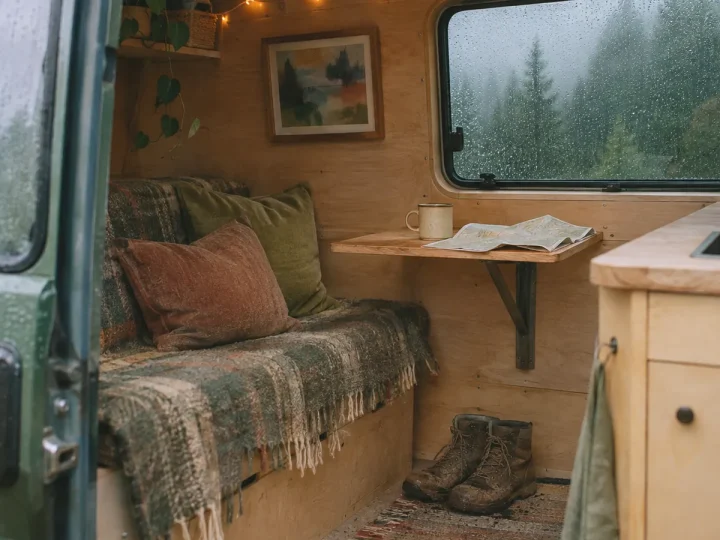
To decorate a camper van or motorhome, keep a light base (wood, white, one or two colours), rely on textiles that add warmth without weight (throw, cushions, rug), choose unbreakable, secured objects, and add a glass-free poster of the roads you love. Few things, but all of them chosen.
A converted van is a home of a few square metres that drives, shakes and wakes up to a new view every morning. So you don’t decorate it like a flat. The ideas below work for a panel van, a low-profile motorhome or an old camper bus, and most of them for a static caravan too. This is about the inside: decorating the bodywork (stickers, wraps) is another story.
Three rules of the road, before you decorate. Everything moves: anything not fixed or stowed will fall at the first roundabout. Every kilo counts: the maximum authorised weight is not a suggestion, and heavy decor eats into your payload. Damp is never far: a small space where you sleep, cook and breathe creates condensation, so you need materials that dry quickly and an interior that can breathe.
Walls and floor
A light palette, and two colours at most
In a small space, light colours make it feel bigger and help the light bounce around. Start with natural wood and off-white, then pick one or two colours to repeat everywhere, on the cushions, the curtain and the poster: sage green and ochre, petrol blue and rust. That consistency is what makes it feel like a real interior rather than a vehicle.
Wood, but not everywhere
Birch or poplar plywood is the material of choice for van conversions: light, warm and easy to work with. But wood from floor to ceiling quickly feels like a dark cabin. Keep the wood for the worktop, the cupboard doors or a single wall, and leave the rest light.
A rug or a carpet laid, not glued
The floor is the forgotten part of van decor, and often the coldest. In our motorhome, we laid an insulating carpet without gluing it, so we can take it out in summer: no more walking on an icy floor in socks, and the living area feels noticeably warmer. A washable cotton rug does the same job in a van, with a touch of colour on top.
Textiles and light
Textiles that change everything and weigh nothing
A wool throw on the bench seat, two or three cushions, a dinette cover in your colour: textiles are the simplest and lightest way to transform a standard interior. Choose fabrics that dry quickly (cotton, linen, wool) and machine-washable covers, because van life is made of sand, rain and wet dogs.
The curtain between the cab and the living area matters too. It is the budget solution we chose to keep the warmth in during winter, and it is also a real decor piece: a thick linen or a patterned canvas closes off the “living room” at night and hides the dashboard.
Warm light instead of the ceiling lamp
Factory ceiling lights shine like a kitchen strip light. In the evening, prefer a warm-white LED string along the ceiling, a small rechargeable lamp on the table, a reading light above the bed. It all runs on 12 V or batteries, and candles are best forgotten in such a small space.
Storage without clutter
Storage that is part of the decor
In a van, every square centimetre counts, so your storage may as well look good. Wicker or rush baskets on the shelves, wooden boxes, cotton bags on hooks: they fill the gaps and add character. Nets are flat and hang anywhere; we put some up for our shoes, Filt1860 nets made in France.
A corner of your own, even in a few square metres
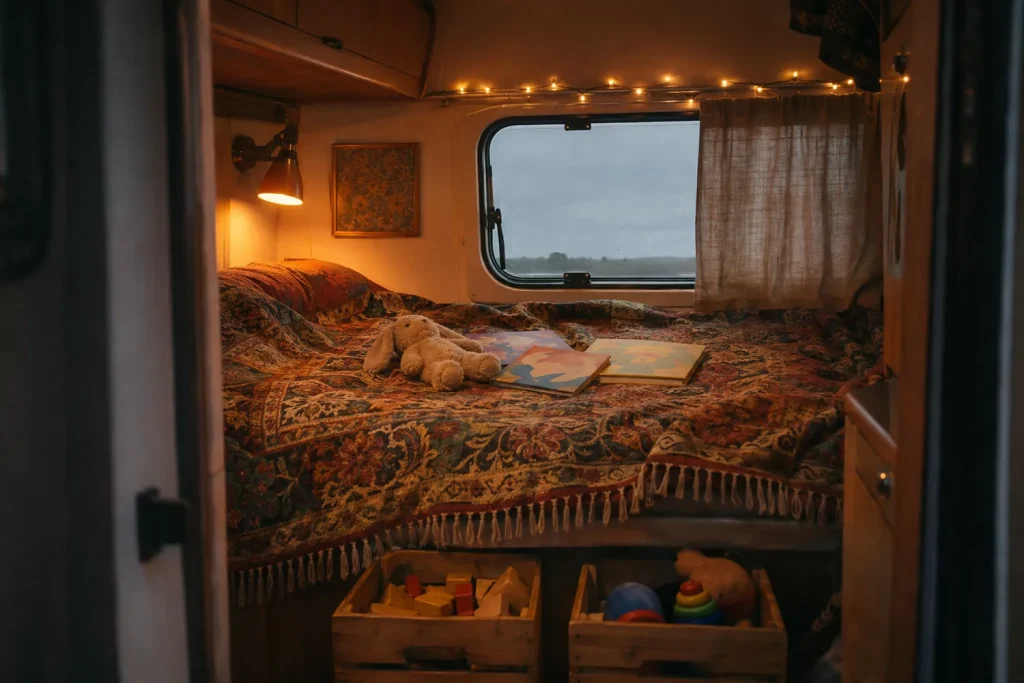
It was the idea that served us best during our first full week in the motorhome with the family, in the middle of summer: a children’s bedroom at the back. A 140 × 200 mattress where they play, read and goof around on rainy days without getting under our feet, a large blanket, and storage boxes at the foot of the bed for the toys. Everyone has their corner, and the van stays liveable. 🚐
For a couple, the idea is the same on a smaller scale: a shelf, a reading light and a frame on each side of the bed, and the van becomes home.
The road kitchen
Unbreakable tableware, but pretty
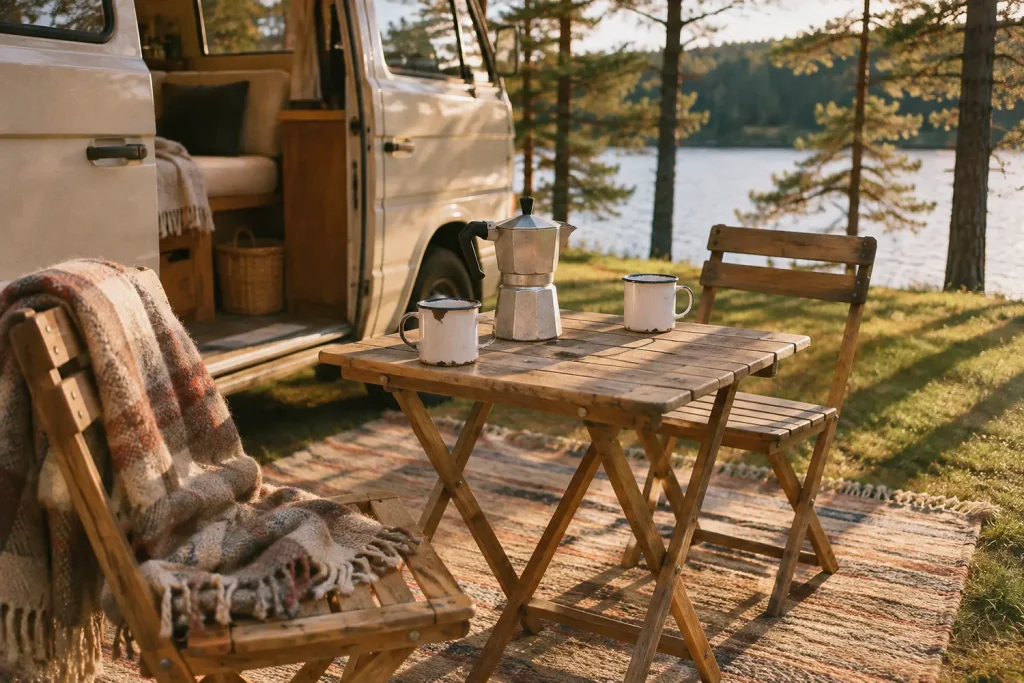
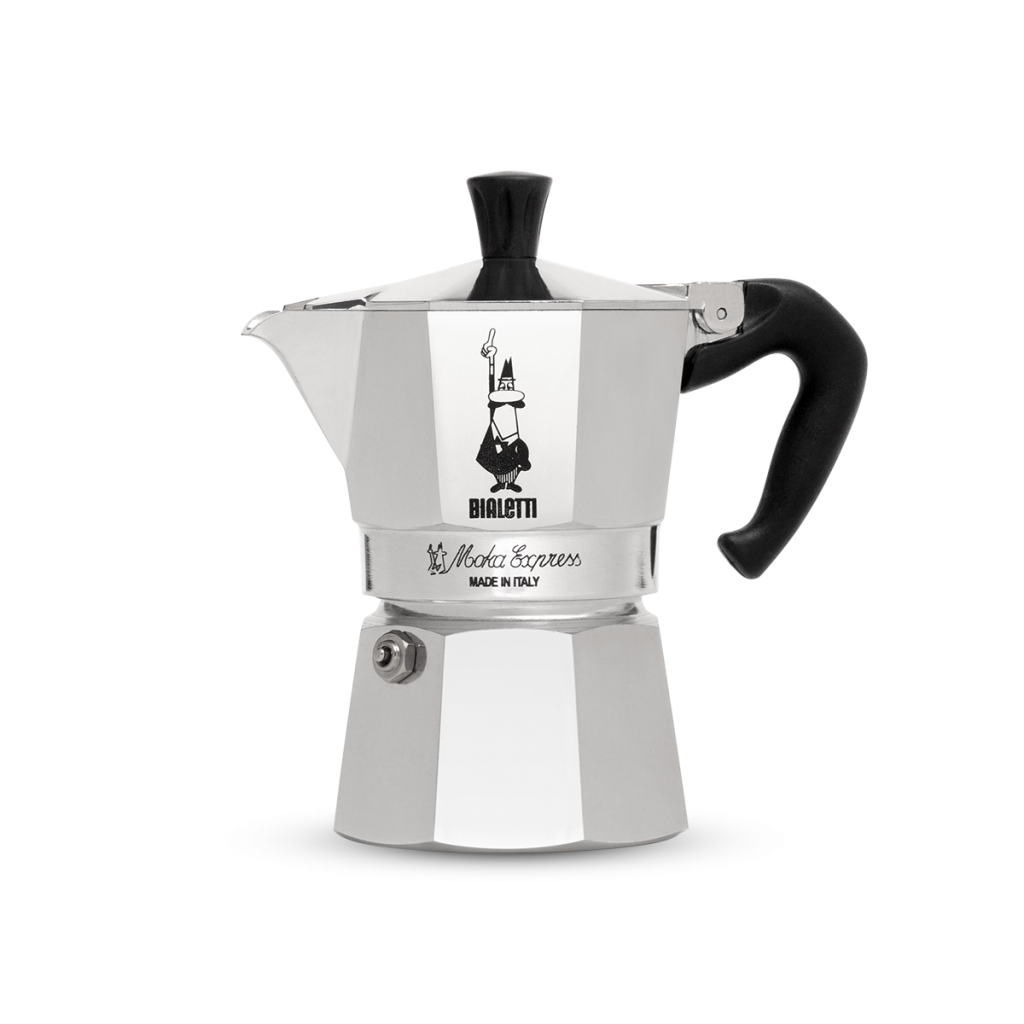
In a converted vehicle everything moves: forget heavy porcelain, without giving up on a nice table. Melamine, bamboo or enamel, in one or two colours that match your textiles, stackable pans with removable handles, and an Italian coffee maker on the hob, which needs no electricity. ☕
The best known is still Bialetti’s Moka Express, designed in 1933 by Alfonso Bialetti, with its eight-sided aluminium body. Left on the stove, it already looks like an Italian kitchen.
Plants that survive the bends
A plant brings a van to life, as long as you choose well: easy-going species (pothos, succulents, spider plant), in light plastic or fibre pots, wedged in a tray or fixed to the wall. For long trips, a bunch of dried flowers in a secured pot works just as well, with no watering.
Posters, road edition
One or two posters, without glass
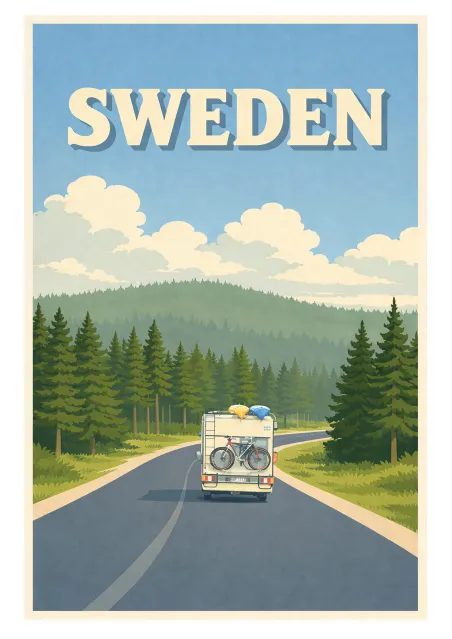
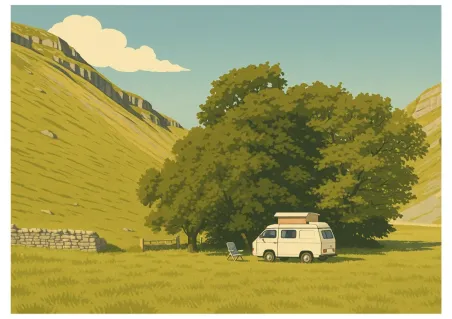
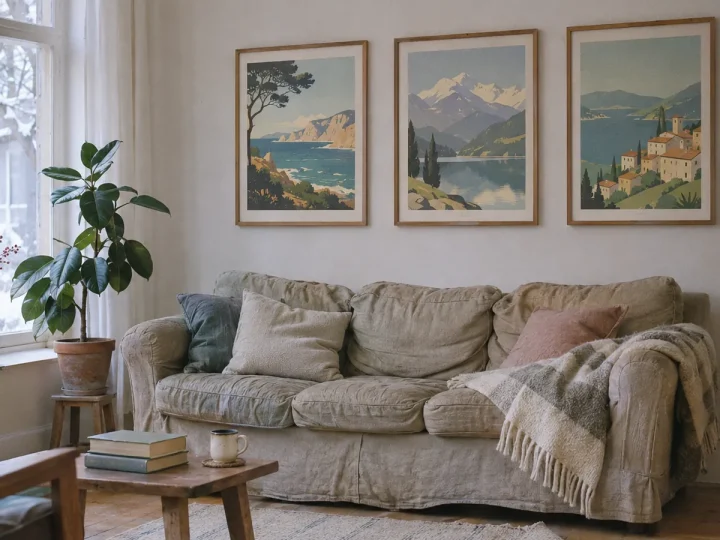
This is what makes a van your van: a poster of the roads you love, from a Norwegian fjord to an Alpine pass. In a vehicle, size matters: an A5 or A4 poster fits between two windows or above the dinette, an A3 on the back wall. Forget glass, which is heavy and can break: a light wooden frame with acrylic glazing, or no frame at all.
Roads to hang in the van
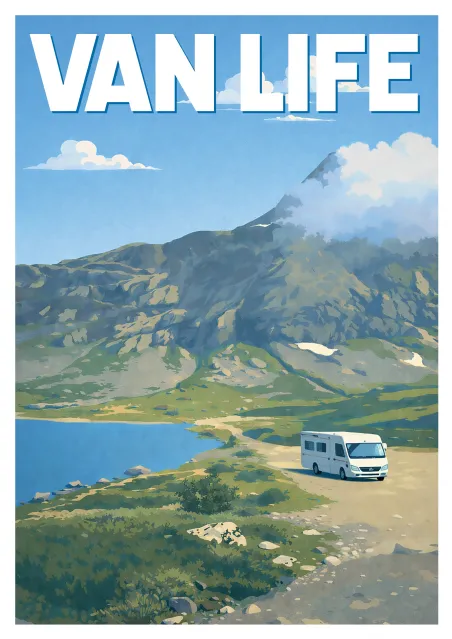
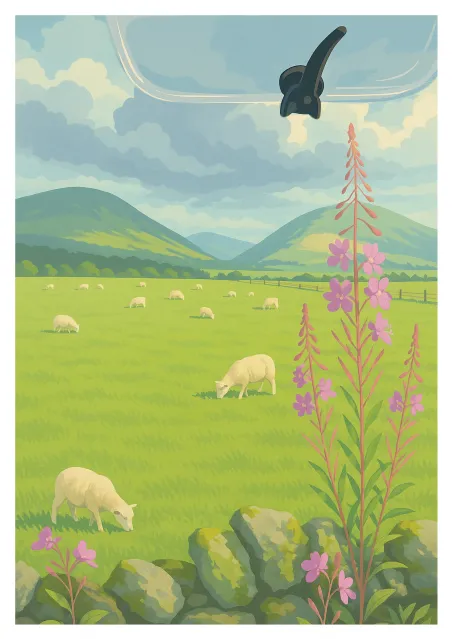
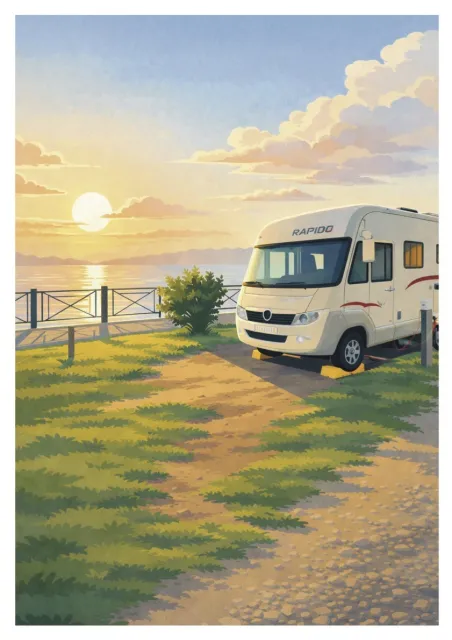
Then it has to stay put on the road. Here is what works on each type of wall. For the walls at home, we cover the options in our guide to hanging a picture without drilling.
| Fixing | For | On which wall | Good to know |
|---|---|---|---|
| Adhesive hook-and-loop strips | Light acrylic frame, A5 to A3 | Wood, laminate panel, smooth plastic | Comes off and goes back on; the heat of a van parked in the sun can soften some adhesives |
| Short screws or small turn clips | Wooden frame, A4 or A3 | Plywood or wooden furniture | The safest option on the road, if the panel is at least a few millimetres thick |
| Magnets | Unframed poster, magnetic poster hanger | Bare metal of a panel van | Handy for changing the poster on every trip |
| Wooden poster hanger and string | Unframed poster, A4 or A3 | Any wall with a hook | Light, but it swings: add an adhesive dot at the bottom |
| Adhesive putty | Unframed poster, A5 | Painted wood, plastic | Only for a small poster; it can give way in the heat |
And if you rent a van, or don’t want to drill anything, the simplest trick is to slip the poster into a frame standing on a shelf with a lip, wedged between two objects.
What about a static caravan?
A static caravan or mobile home doesn’t move, and that changes everything: you can hang glass frames, a mirror, a bookshelf. Decorate it like a small holiday home, with the same rules of light colours and materials that cope with sand. Our seaside decor ideas suit it well, and if you rent it out, so do our holiday rental decor tips.
Frequently asked questions
How do you decorate a camper van?
Start with a light base (wood, off-white) and two colours at most, add warmth with light textiles (throw, cushions, rug), choose storage that decorates (baskets, nets, wooden boxes) and warm lighting. Secure anything that could fall, and add one or two glass-free posters.
How do you hang a frame in a motorhome?
Choose a light frame with acrylic rather than glass. On a wooden panel, small screwed clips are the safest on the road; on a smooth wall, adhesive hook-and-loop strips hold well and come off cleanly. On the bare metal of a panel van, magnets are enough for an unframed poster.
Which poster should you put in a van?
A poster of the roads or places you love: a fjord, a mountain pass, a town where you slept in the van. A5 and A4 suit small walls, A3 the back wall. Our posters come in A5 (€15), A4 (€19) and A3 (€24), with a dedicated Van life collection.
How do you make a motorhome cosier?
Swap the ceiling light for a warm-white string of lights or a lamp, put a rug or carpet on the floor, add a throw and cushions in matching colours, and a curtain between the cab and the living area. A few personal souvenirs, a poster or a photo, finish turning the vehicle into an interior.
Which plants can you keep in a van?
Undemanding plants that cope with temperature swings and forgotten waterings: pothos, succulents, spider plants. Choose light plastic or fibre pots, wedged in a tray or fixed to the wall for driving. For long trips, a bunch of dried flowers in a secured pot does just as well, with no watering at all.
How do you decorate a static caravan?
Like a small holiday home: light colours, natural washable materials (linen, cotton, rattan), clever storage and a few souvenirs on the wall. Since it doesn’t move, you can hang regular frames. Keep the furniture light to save space, and make the most of the deck, often the real living room.
A new garden every day
On our first motorhome trip, we packed far too much. You quickly learn that the essential is outside: travelling in a converted vehicle is about changing your garden as you wish. So van decor doesn’t need to be busy. A few chosen things are enough, and a poster on the wall to keep the roads you have already travelled.